Analytical Technologies
We deploy genome scale analyses across our stem cell and organoid platforms:
- Single cell and Single nuclei RNAseq on cell lines and organoids
- Bulk RNAseq for population-level transcriptomics
- Bulk and single nuclei ATACseq for chromatin accessibility
- Proteomics for protein-level validation
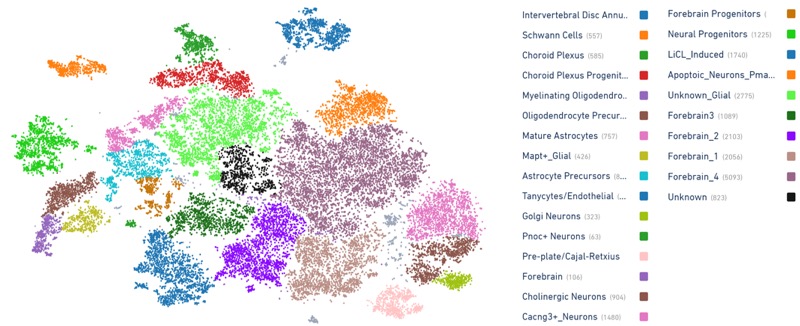
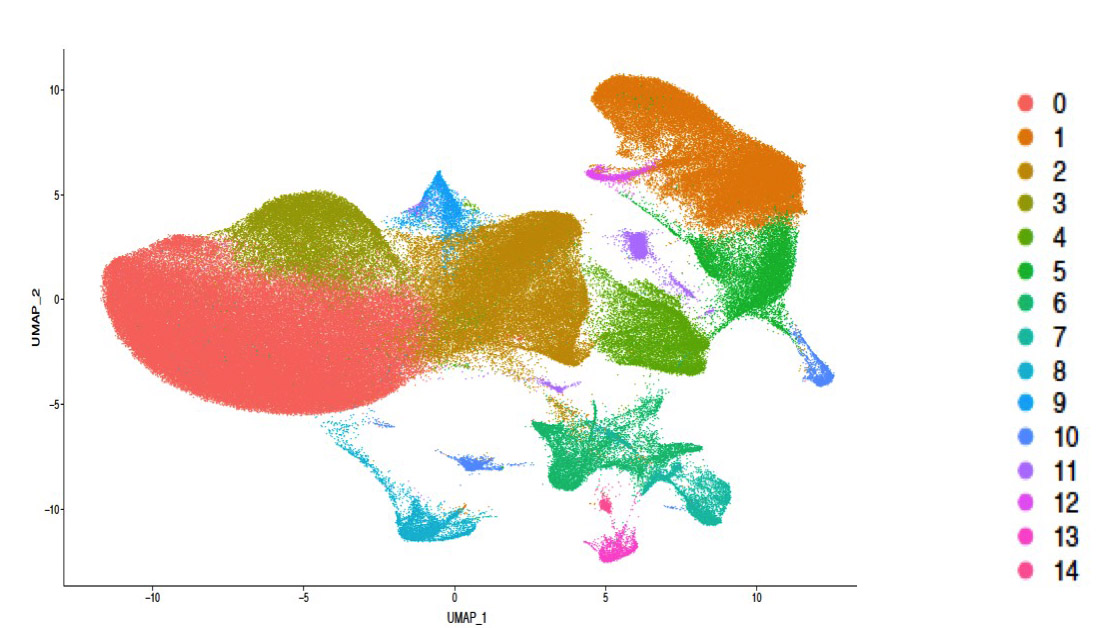
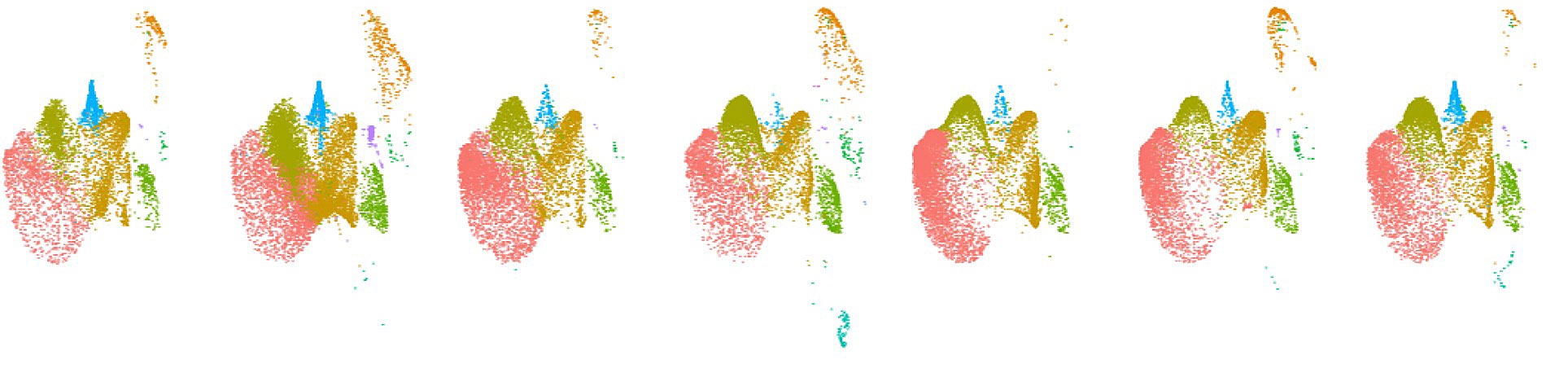
Plate-Based Assays
Our screening infrastructure includes multiple complementary readouts:
- High Content Analysis (PerkinElmer Opera) for image-based phenotyping
- RTCA Impedance Assays (ACEAbio) for real-time cellular analysis
- Microelectrode Array (Axion Maestro) for electrophysiology
- Multimode Plate Reader (PerkinElmer Envision) for fluorescence, luminescence, and hTRF
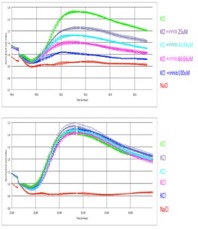
Custom Cardiotoxicity Screen
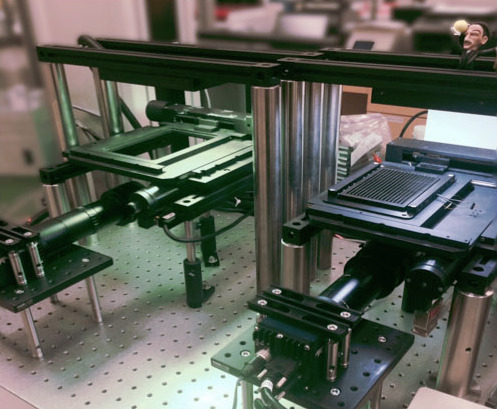
We often develop custom assays for our projects. For a recent project involving genetics of tyrosine kinase inhibitor induced cardiotoxicity, we built our own instrumentation.
We needed to conduct beating assays for over 700,000 wells of cardiomyocytes derived from over 200 ESC lines. No commercially available instrument or assay met the throughput and cost constraints of the project, so we designed and built a custom imager to meet our needs.
Capabilities
- Fully automated high throughput beating cell imager
- 10K wells per day current screening capability, scalable to over 100K wells per day
- 20 minute scan time per 384 well plate, capturing 20 seconds of beating per well
- Real-time analysis of image data
- Completely non-invasive and label-free assay
- Uses conventional low-cost plasticware
- Can measure beating in very small regions of the well
- Uses mouse or human ES/IPS cell lines “off the shelf” without modification or purification
How It Works
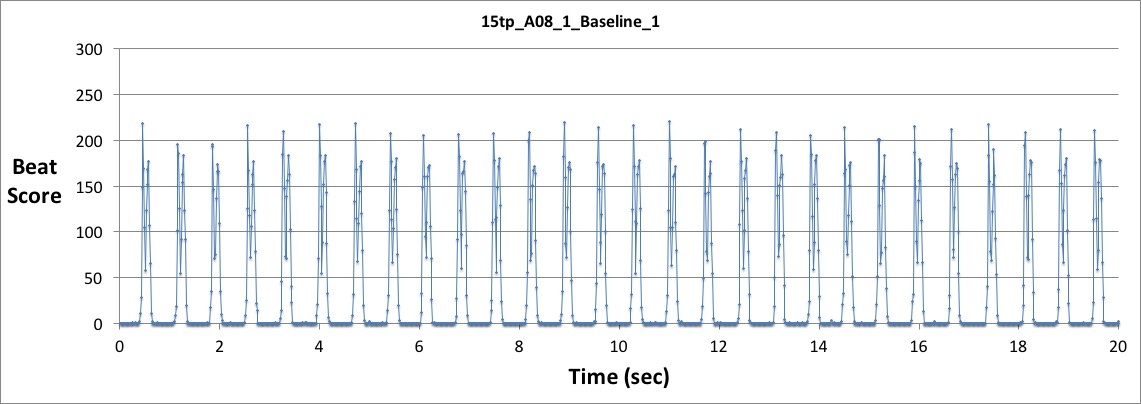
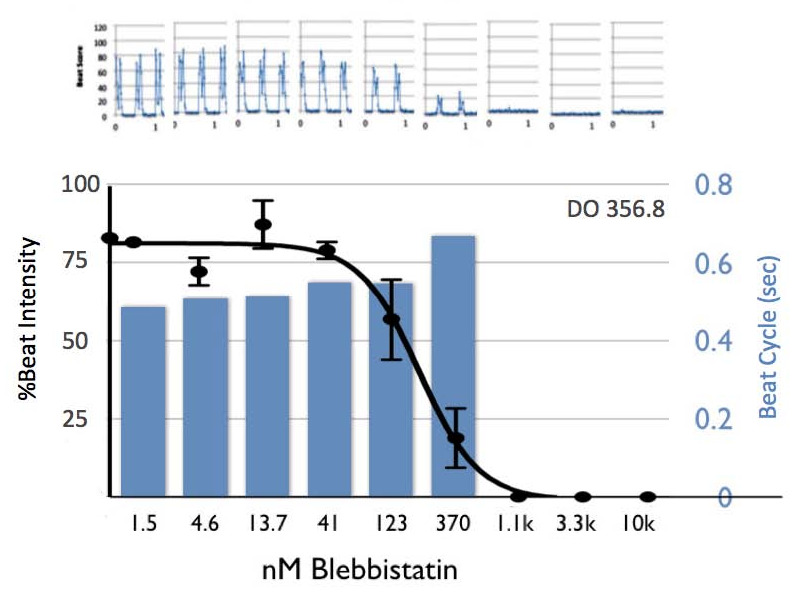
The imager digitizes motion in each well and the analysis software automatically places up to four regions of interest (ROI) at points of optimal beating. Each beat consists of two peaks, one for contraction and one for relaxation. A built-in peakfinding routine catalogs the beats to calculate the beat-to-beat cycle time. The mean and coefficient of variation for beat score and beat cycle are automatically calculated.
Assay Robustness
Embryoid bodies exhibit a high degree of variability and heterogeneity of cells—the location and size of cardiomyocyte patches are unpredictable. In our assay, very small beating patches are scored for beating, and any cells/activity outside of the ROI is ignored. This assay does not require synchronized beating across the entirety of the well surface. Wells with multiple independent beating clusters can serve as in-well replicates.
Validated Compounds
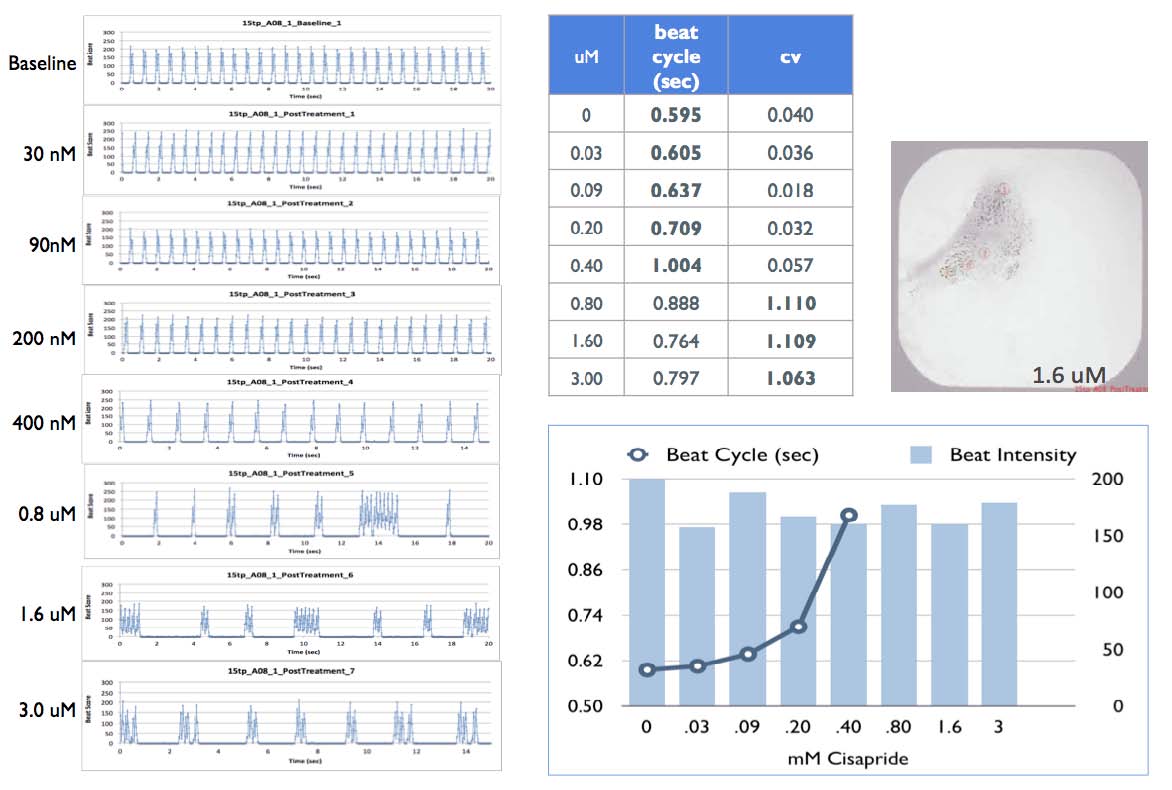
Our assay resolves distinct pharmacological effects:
Cisapride: Lengthening beat cycle and fibrillation-like beating with increasing dose
Blebbistatin: Inhibition of contractility but not rhythmicity
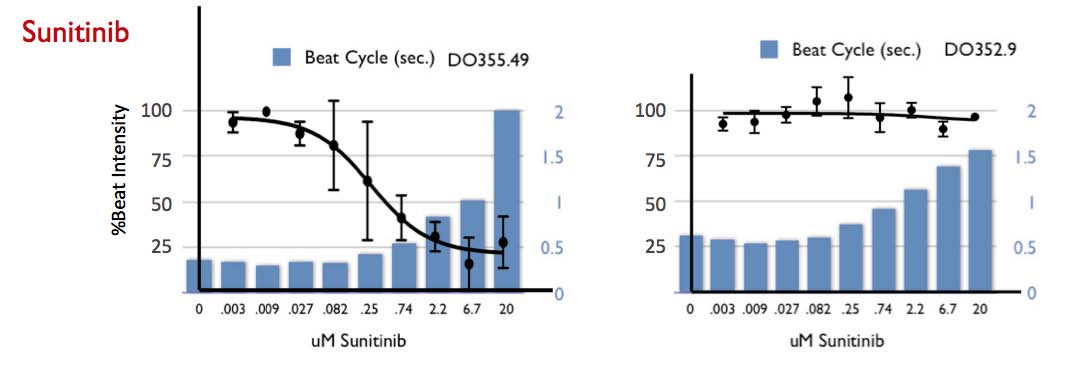
Sunitinib: Effect on contractility resolved from effect on beat cycle, showing different potencies across genetic backgrounds